Arrive prepared. Leave with better questions.
Preparation can make a conversation with an estate-planning attorney more focused. This checklist is a starting point—not a substitute for legal advice or a complete list for every family.
A will and a trust solve different problems.
For many plans, the question is not “will or trust?” A well-considered plan can use a will as a safety net and a trust where ongoing management, privacy, or a more tailored distribution plan is useful.

Give clear directions.
Name an executor, nominate guardians for minor children, and direct probate assets to the people or causes you choose.
Read the will guide →
Set terms for stewardship.
A trust can hold property for beneficiaries and spell out how a trustee manages or distributes it under the terms you establish.
Read the trust guide →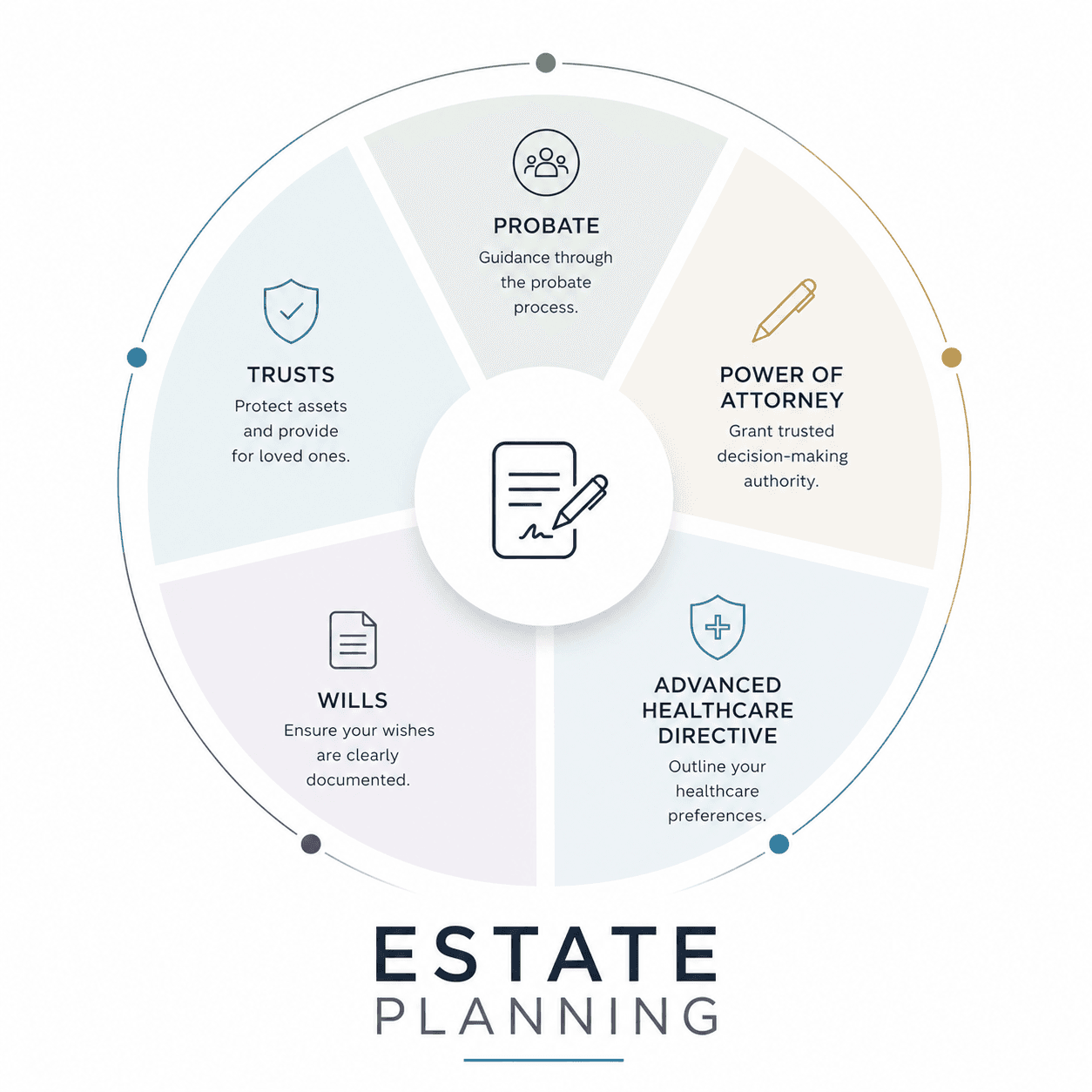
See the whole picture.
Bring your will, trust, powers of attorney, health-care wishes, and other decisions into one coordinated plan.
Use the planning checklist →
Bring your family assets and goals into focus.
A simple inventory gives your attorney a more useful starting point and helps make sure no important account, property interest, or person is overlooked.
Gather information then prioritize the decisions.
You do not need every answer before meeting an attorney. A clear snapshot of your assets, people, and concerns gives the conversation a useful starting place.
- 1A current list of assets, debts, business interests, and digital accounts
- 2Account titles and beneficiary designations for retirement, insurance, and transfer-on-death accounts
- 3Names and contact details for potential executors, trustees, guardians, agents, and backups
- 4Questions about family circumstances, prior marriages, blended families, dependents, and charitable goals
- 5Existing estate-planning documents and any property agreements
- 6A plan for storing originals and telling the right people how to find them

Your estate plan is about the people who count on you.
A thoughtful plan can help you name the people you trust, care for different generations, and leave clearer instructions during an already difficult time.
What documents are appropriate for my family and goals under this state’s laws? How will my assets actually pass at death or incapacity?
What must be done after documents are signed—such as updating titles, beneficiary designations, or records? When should the plan be reviewed?
This material is educational and may not address all relevant issues. Consult a qualified attorney licensed in your state and a tax professional where appropriate.